Two lanes. One review gate.
Before submission, AppealOS checks the chart against the payer's policy. After a denial, it rebuilds the case against the same policy. In both lanes a person in your practice approves before anything can be exported — and you submit through the payer's channel, not ours.
Every image below is the live product on synthetic data — invented patients and practices, real public payer policies.
PA readiness check
Chart → criteria check → gather what's missing → letter of medical necessity packet → your approval.
Chart in
Upload the chart note, labs, and prior-treatment history. Select the payer policy that governs the request.
Criteria check
Each criterion in the policy is marked met or not yet shown, with the chart quote beside it and the policy page cited.
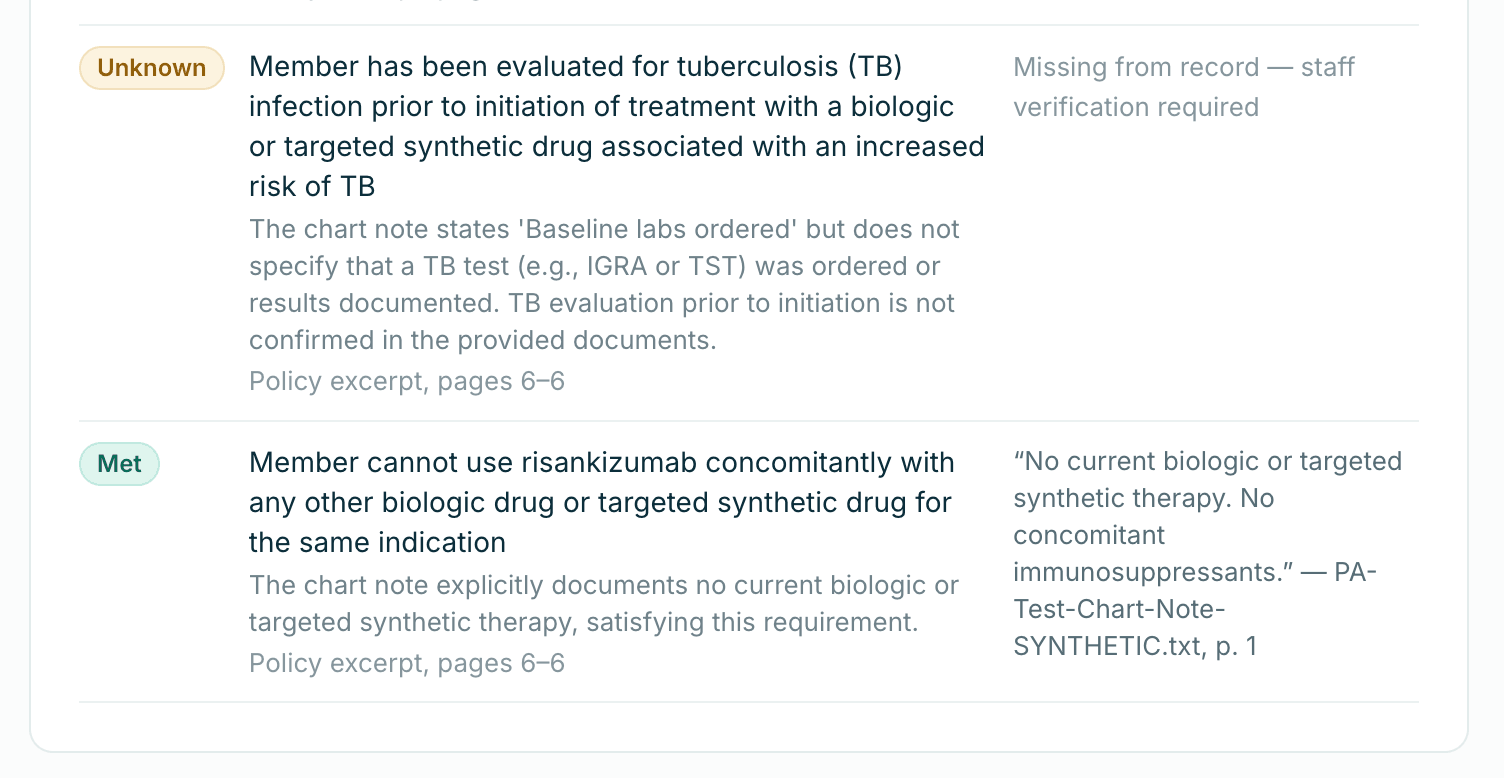
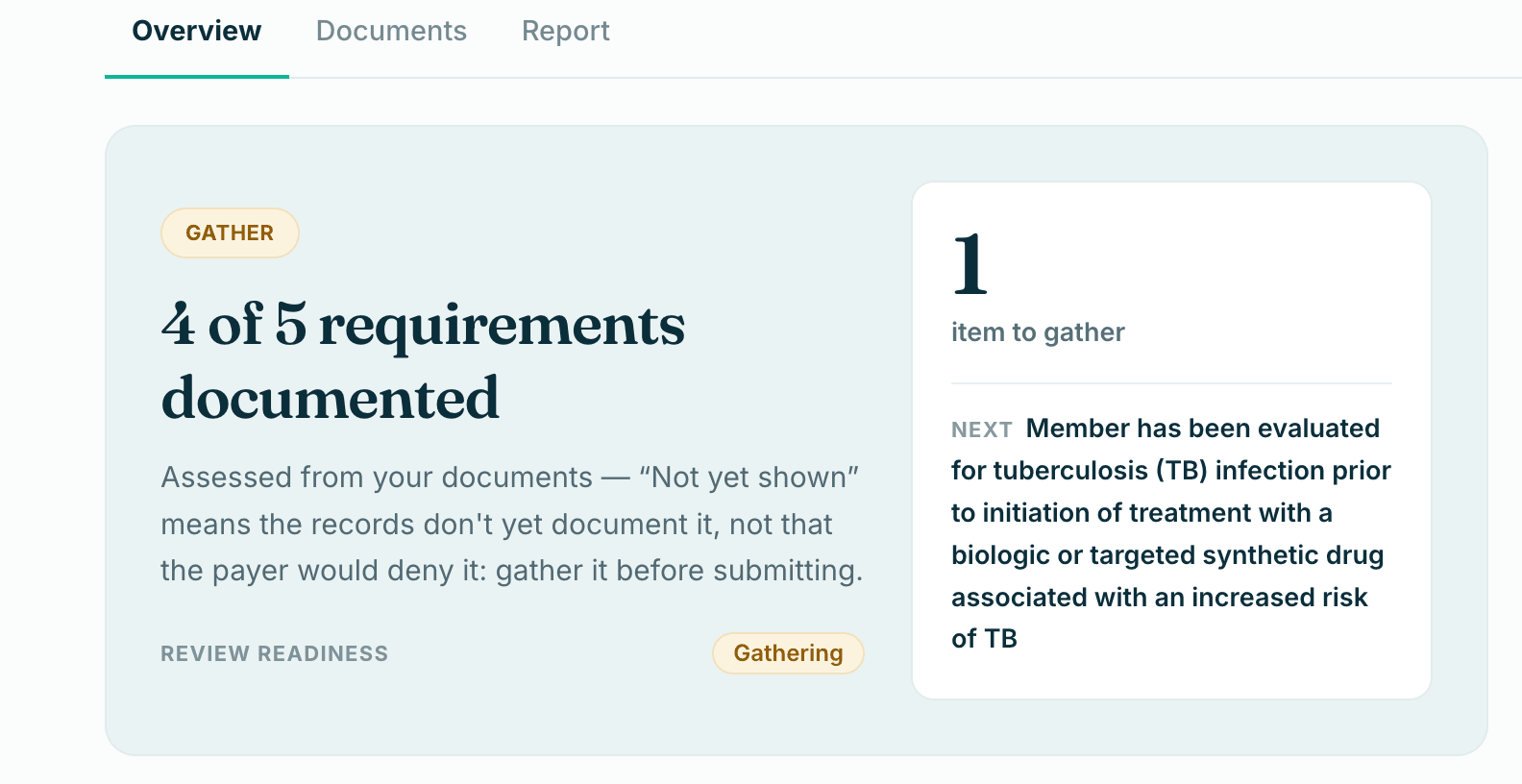
Gather what's missing
"Not yet shown" means the records don't document it yet — not that the payer would deny it. The readiness report lists exactly what to obtain before submitting.
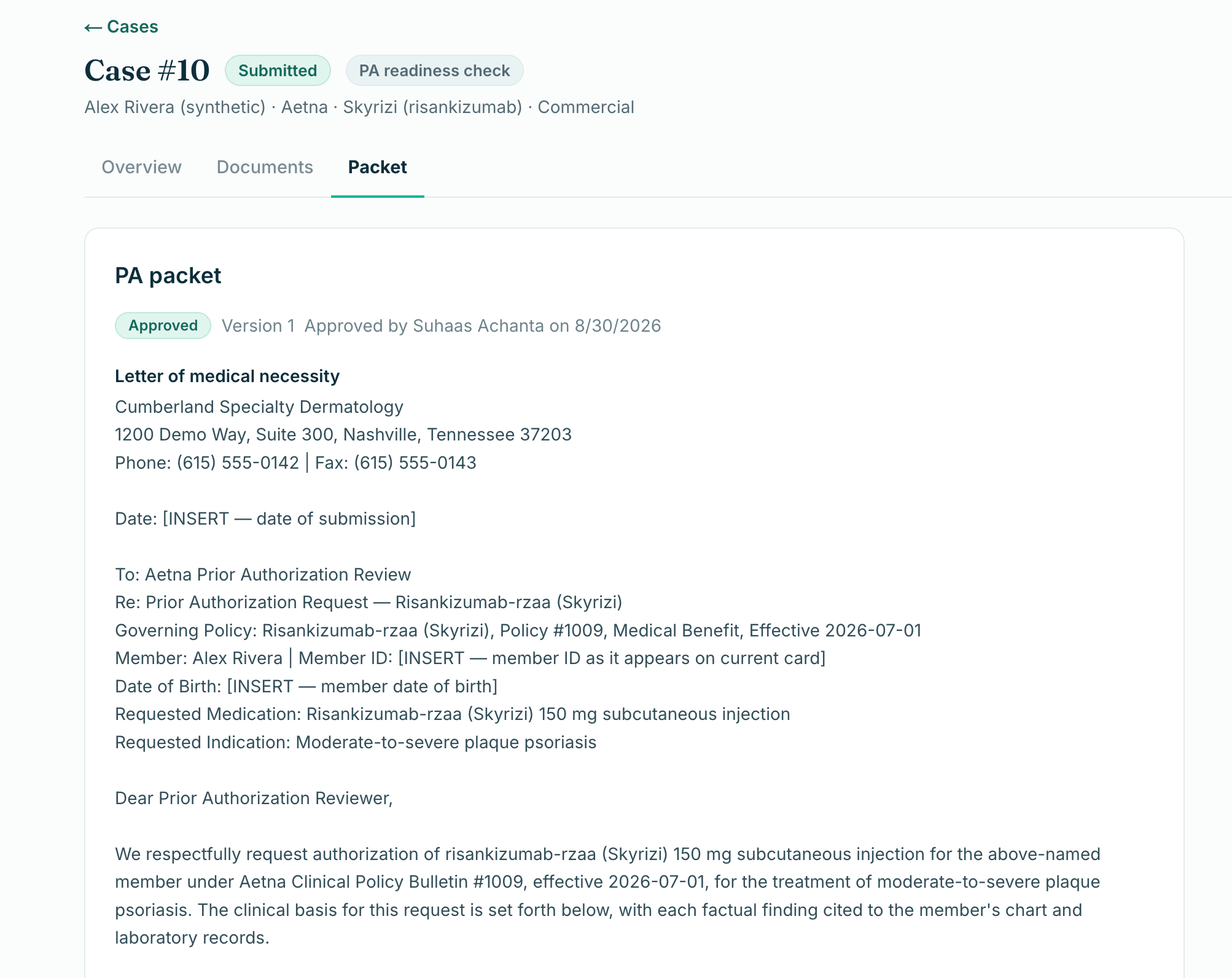
Letter of medical necessity packet
Drafted only once the gather list is clear. Every factual finding is cited to the chart; every requirement to the policy section it satisfies.
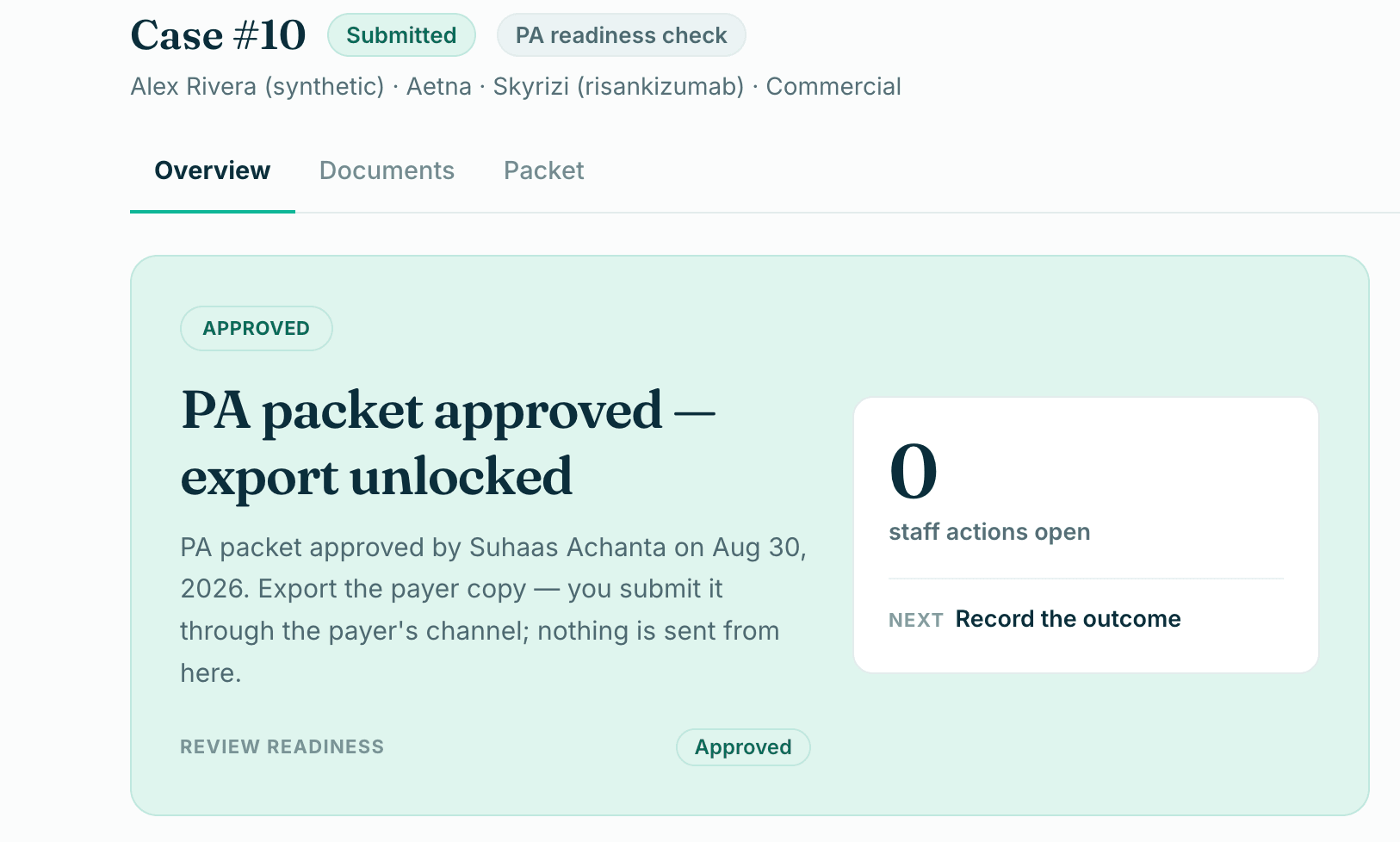
Human review gate
Export is locked until a person in your practice approves. Then you export the payer copy and submit it through the payer's channel — nothing is sent from AppealOS.
Appeal packet
Denial letter + chart → criteria check → cited appeal packet → staff actions → your approval → payer copy.
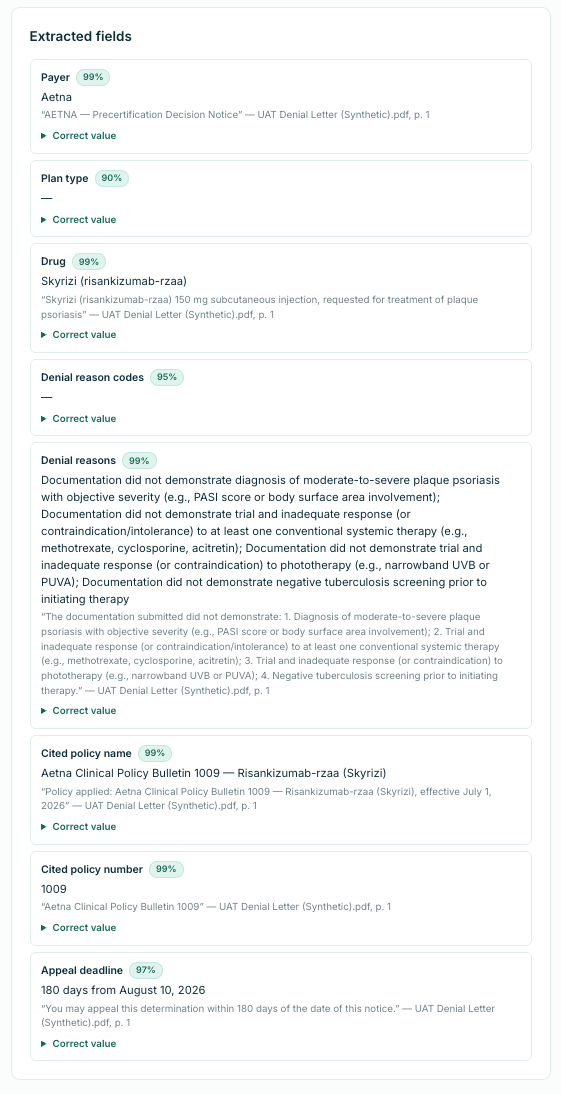
Denial letter + chart in
The denial's reasons, codes, cited policy, and deadline are extracted with a confidence score on each field. Your staff can correct any value; corrections survive re-runs.
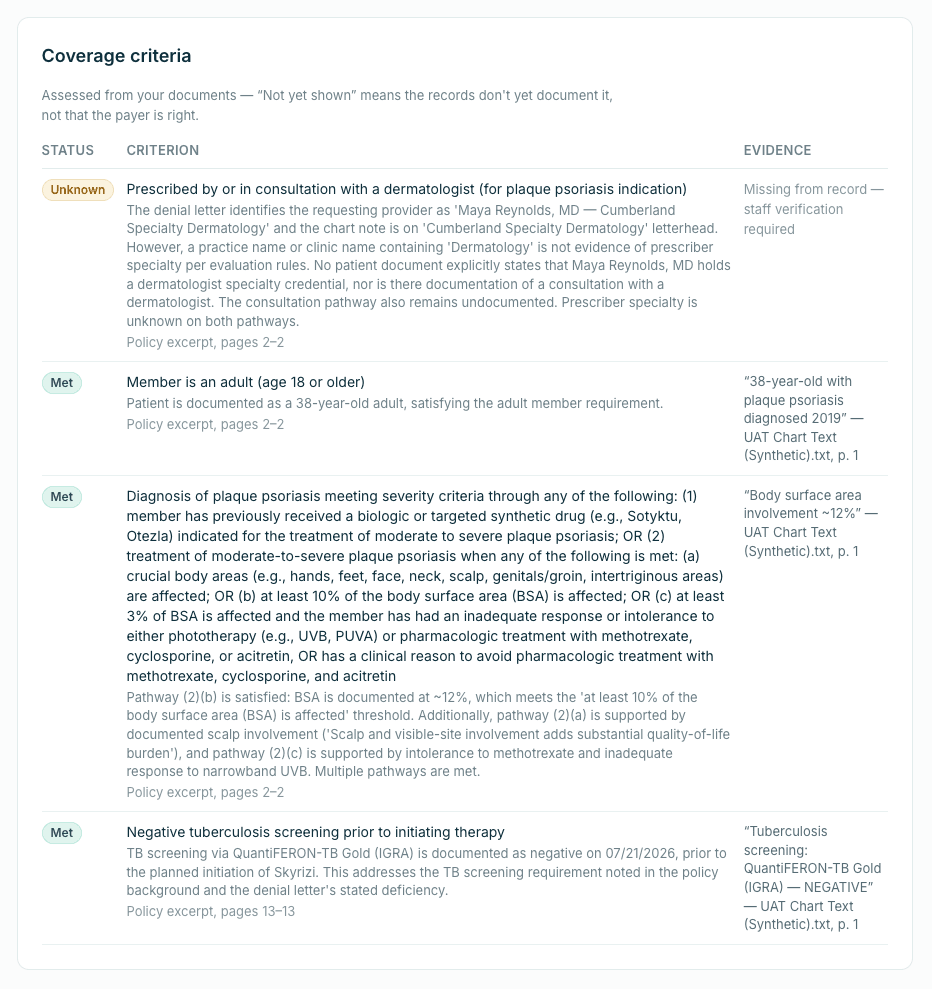
Criteria check
The criteria the payer cited, checked against the payer's own published policy: met, unmet, or unknown — never met without evidence.
Cited appeal packet
The appeal letter, the codes and duration request, and a pre-submission checklist. Every claim carries a [C#] marker that resolves to a page of the policy or a line of the record.
![Approved appeal packet, version 2: the appeal letter header with practice letterhead, payer address, RE block and [C1] citation markers](/_next/image?url=%2F_next%2Fstatic%2Fmedia%2Fappeal-letter-top-v2.140pi0an0pro4.png&w=3840&q=90&dpl=dpl_EmutM7DVRLEW7hLzSKR58K5uSKT2)
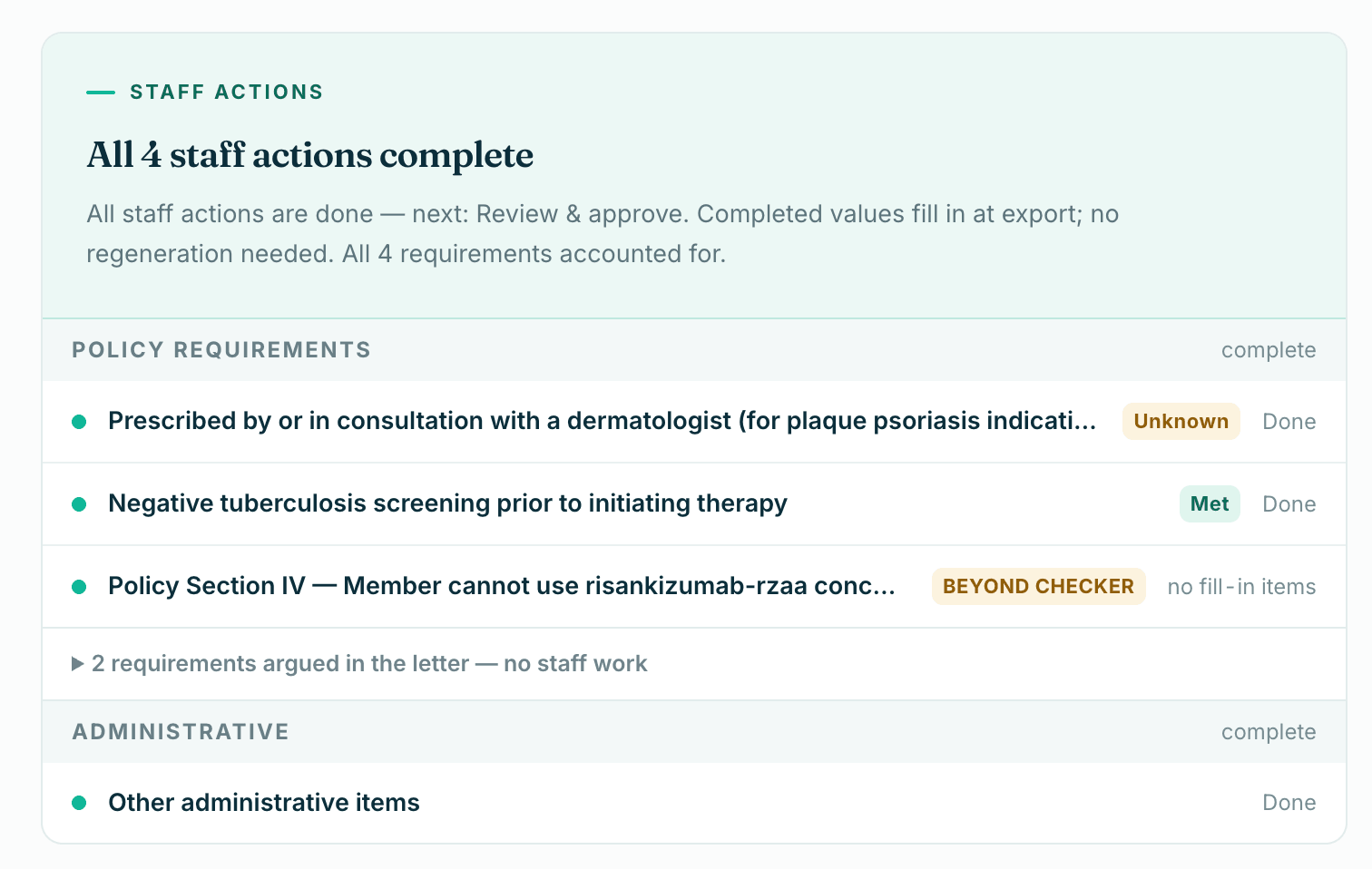
Staff actions
What only your office can supply — a credential, a lab result, a confirmation — tracked to done. Completed values fill in at export; anything still open prints as its bracketed placeholder.
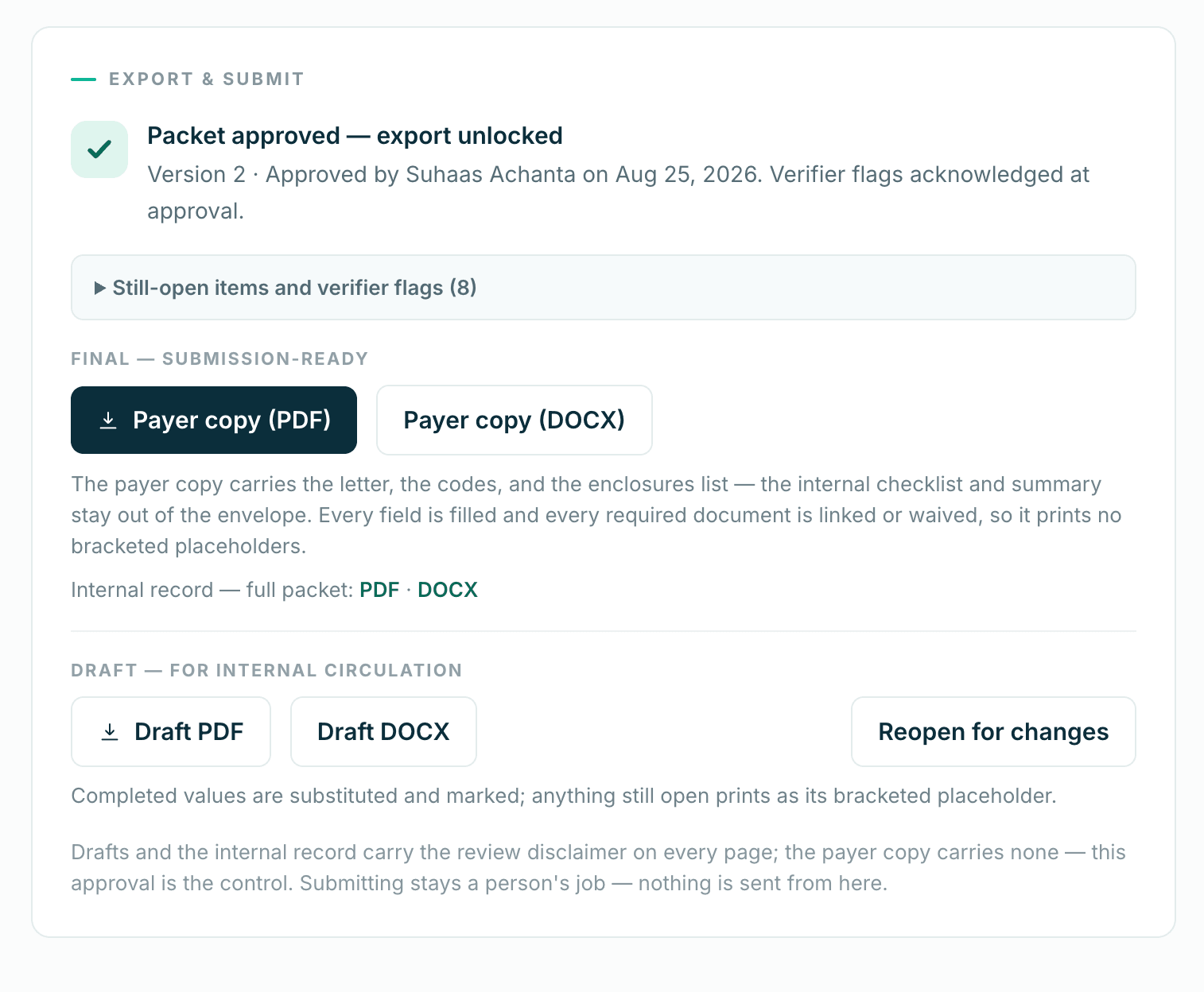
Human review gate → payer copy
Approval unlocks the payer copy: the letter, the codes, and the enclosures list. The internal checklist and summary stay out of the envelope. Submitting stays a person's job.
One case, one complete and defensible packet.
The letter
Letter of medical necessity or appeal letter, quoting the payer's own policy language, signed by your provider.
Criteria table
Met, unmet, or unknown for every criterion, each linked to the evidence in the record and the page of the policy.
Codes & duration
ICD-10, CPT and HCPCS codes drawn from the policy, plus an explicit authorization-duration request.
Staff-action checklist
What to attach, confirm, or waive before submitting — the items only your office can supply.
Sources list
Every [C#] marker resolved to a quoted page of the payer's policy or a line of the chart.
Payer copy & internal record
A clean PDF or DOCX for the payer after approval; the checklist and summary stay in your record, with the outcome logged.
Behind both lanes: a payer policy library. The published medical policies for the biologics you prescribe, per payer, stored with version and effective date. Your payers' policies are loaded before your first case.
See both lanes on a synthetic case.
A 20-minute walkthrough — the criteria check, the gather list, the review gate — then a conversation about your payers and drugs.